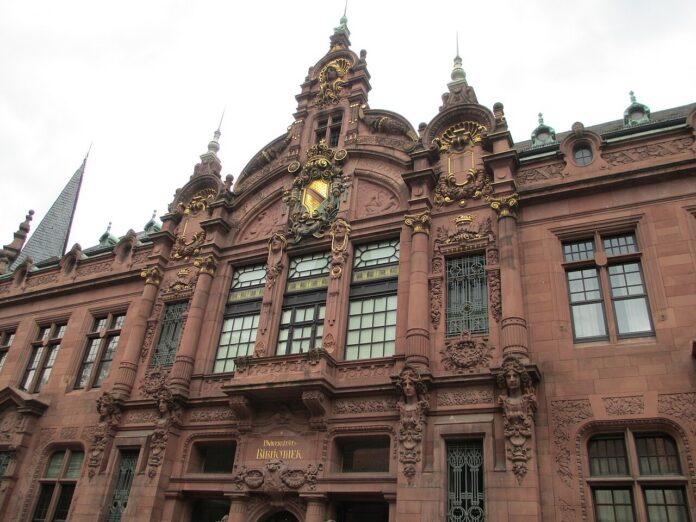

When someone back home says “education in Germany is free”, the listener immediately understands it to mean that going to Germany is free. This is where the whole misunderstanding begins. The truth is that Germany’s public universities really do charge no tuition fee — not for a Pakistani student, and not for a German one. But there is a world of difference between studying being free and living being free, and Germany’s real test is not the fee, it is the proof of funds.
So let us open up the things an agent usually does not tell you: how much money you actually need, whether you get that money back or not, and where people end up losing both their year and their money.
The real fee arithmetic — what “free” means
Germany’s sixteen states (Bundesländer) run their own higher education. Almost all of them have abolished tuition fees at public universities. That means whether it is TU München or Universität Heidelberg, no tuition is charged per semester for your bachelor’s or (continuing in the same subject) your master’s.
But remember two things.
First: the semester contribution (Semesterbeitrag). Each semester you have to pay a sum of roughly €150 to €400. This is not tuition — it is a combined amount covering the student welfare organisation (Studierendenwerk), the student union, and often the city’s public transport ticket. At many universities you get a bus and train ticket for the whole region in return, so in practice this money comes back to you.
Second, and this one matters more: Baden-Württemberg. This is the state with well-known universities such as Heidelberg, Freiburg, Stuttgart, Karlsruhe (KIT) and Tübingen — and this state charges non-European (non-EU) students roughly €1,500 per semester in tuition. That is about €3,000 a year. Pakistani, Indian and Bangladeshi students fall into this category. If your dream is Heidelberg, include this amount in your budget, otherwise you will get a shock after admission.
One more thing: private universities (private Hochschulen) are outside this discussion; they charge thousands of euros a year. “Free education” refers only to public institutions. Always check the current amount on the relevant university’s own website, as it can change every year.
Sperrkonto — the money that is your own, not a fee
This is the most important part of this whole article, and it is where the greatest misunderstanding is found.
Before granting a visa, the German embassy wants to be satisfied that you will not go hungry there for a year. The most common proof of this is the Sperrkonto, that is, a blocked account. You open an account with an approved provider in Germany and deposit an amount equal to one year’s living costs — at present this is somewhere between €11,900 and €12,500, and it changes every year. Always check the exact figure on the embassy’s or the Federal Foreign Office’s website.
Now the real point, read it carefully: this money is not being taken from you. It is your own money and it comes to you. After you reach Germany, this account comes under your control, and each month a fixed amount from it (around one thousand euros) is transferred to your ordinary bank account, from which you pay for rent, food and the bus ticket. By the end of the year you have spent all of this money — because that was the whole point.
Many families back home think that “the Germans will keep the twelve thousand euros”. No. This is a guarantee, not a fee. That is why it is important to understand that Germany’s real cost is not tuition but living — and this is the money you need in any case, whether the embassy asks for it or not.
There are alternatives to the blocked account too: a formal undertaking (Verpflichtungserklärung) from someone resident in Germany, or a recognised scholarship. But for the ordinary Pakistani applicant, the Sperrkonto is the straightforward route.
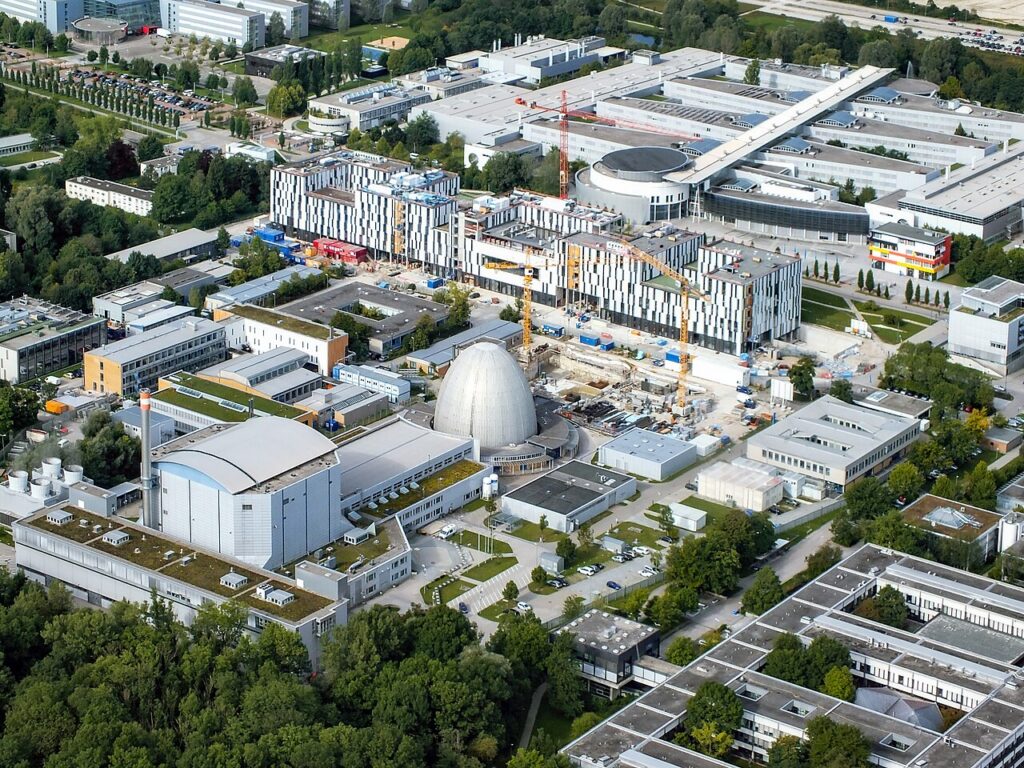
Language — this is the decisive point
In Germany there are hundreds of master’s degrees taught entirely in English, especially in engineering, computer science, data science, physics and business. For these, IELTS or TOEFL is enough and there is no German language requirement.
The bachelor’s situation is the opposite. Most are taught in German and usually require a C1 level examination (TestDaF or DSH). Bachelor’s degrees in English exist but are fewer, and competition for them is tough.
Now the thing no agent will tell you. You may take an English-taught master’s and get the degree, but work and living in Germany depend on the language. Apart from some areas of IT, most employers ask for at least B1–B2 German, and part-time work — cafés, supermarkets, delivery, office assistant work — runs almost entirely on German. The student who learns the language from day one is in a job three years later; the one who does not is standing there with a degree in hand looking at a ticket home. Doing A1–A2 before leaving Pakistan is the cheapest investment you can make.
The admission route: anabin, uni-assist and Studienkolleg
Germany first looks at where your Pakistani qualification stands against its own standard. Its official database is anabin.kmk.org. On it you can look up your board, your institution and your degree.
The general rule is that intermediate alone (twelve years of schooling) is usually not considered enough for direct admission. In that case there are two routes: either do a Studienkolleg — a one-year preparatory course covering German language and subjects, ending with the Feststellungsprüfung examination — or study one to two years of a bachelor’s at an HEC-recognised university in Pakistan before going, after which direct admission is often possible. Since the requirement can differ by state and by institution, check your particular situation against anabin and the university’s own page.
Applications go in two ways: some universities take the application themselves on their own portal, and many go through uni-assist.de, the shared body that checks foreign qualifications. uni-assist has a small fee (a few dozen euros for the first application), but this is not an agent’s fee — you pay it yourself and you create the account yourself.
The deadline for the winter semester (October) is usually around 15 July, and for the summer semester (April) around 15 January, but English-taught master’s programmes close much earlier, sometimes in December. Plan at least a year ahead.
Well-known public universities
- Technische Universität München (TUM) — Germany’s most prominent name in engineering and computer science.
- Ludwig-Maximilians-Universität München (LMU) — a wide range of subjects, in Munich.
- RWTH Aachen — a stronghold of mechanical, electrical and industrial engineering.
- Technische Universität Berlin and Humboldt-Universität zu Berlin — the capital’s two large public universities.
- Freie Universität Berlin — strong in social sciences and humanities.
- Universität Heidelberg — Germany’s oldest university (remember: Baden-Württemberg, so the non-European fee applies).
- Universität Freiburg and Karlsruhe Institute of Technology (KIT) — these are in the same state.
- Universität Göttingen and Universität Bonn — a long-standing reputation in research.
Besides these, TU Dresden, Universität Hamburg, Universität Stuttgart and Leibniz Universität Hannover are also public institutions. Open each institution’s own page and read the International Students section — that is where the actual requirements are written.
The official national portal is DAAD’s: study-in-germany.de. It has a free database of programmes taught in English and a list of scholarships — sitting with this you can do yourself the work an agent charges hundreds of thousands for.
A realistic monthly budget
These are estimates, not final figures. Munich, Frankfurt and Hamburg are expensive; Leipzig, Dresden and the smaller cities of eastern Germany are considerably cheaper.
| Expense | Approx. monthly (euros) | Note |
|---|---|---|
| Rent (shared room / WG or hostel) | €350 – €650 | Even more than this in the big cities |
| Food and household shopping | €200 – €280 | The lower end is possible if you cook yourself |
| Health insurance (student rate) | €120 – €150 | Compulsory; enrolment is not complete without it |
| Transport | €0 – €60 | Often included in the semester ticket |
| Mobile, internet, books | €40 – €70 | |
| Personal and miscellaneous | €100 – €150 | |
| Total | About €850 – €1,150 | That is roughly €11,000–13,000 a year |
Notice that this total happens to come out near the Sperrkonto amount. That is no coincidence — the embassy sets the figure on exactly this basis.
Permission to work, and the route after your studies
Non-European students are allowed to work during their studies: under the current rule, about 140 full days or 280 half days a year. Assistant jobs within the university (HiWi) may be counted separately from this limit. This can lighten your expenses, but put the idea out of your mind that work will cover the whole cost — in the first semester, language and study take up all your time.
After completing the degree, Germany gives a permit of about 18 months so that you can look for a job related to your education. During this time you can do any work to support yourself. If you find a job, you move to a work permit or the EU Blue Card. The Blue Card requires a relevant degree and a set minimum annual salary (the threshold is lower for shortage fields — IT, engineering, medicine). These figures change every year, so always check them from an official source. After that, the door to permanent residence (Niederlassungserlaubnis) opens after a set period, and for Blue Card holders that period is comparatively shorter, especially if your German is good.
So the route is clear: admission → degree → eighteen months → job → Blue Card → permanent residence. Every step is legal and in your own hands — but no step is automatic.
The frauds sold in Germany’s name
“Guaranteed admission”. No agent can guarantee admission to a German public university. Admission is granted by a selection committee, on the basis of marks and documents. Anyone selling a “certain admission” is either a commission agent for some expensive private institution or is lying.
Fake blocked account providers. There are companies on the internet selling a cheap Sperrkonto that the embassy does not recognise at all. Use only a provider whose name is listed on the German embassy’s own page. Never send money to a personal account.
Fake bank statements or fake documents. This is the most expensive mistake. If you are caught, it is not only the visa that is refused — a ban of several years can be imposed for the whole Schengen area, and that record follows you. One lie closes doors for ten years.
The “we will submit the application” business. You can submit the application to a public university yourself: the portal is free, uni-assist’s fee is small, DAAD’s database is free. Money demanded in the name of “processing” is often the price of your not knowing. Getting help with translation and attestation is a different matter, but that does not cost thousands of euros.
“You can bring your family over during your studies”. Bringing family on a student visa has its own strict conditions and is often not approved. Do not plan on the assumption that it is certain.
So is Germany for you?
If you have a degree with good marks, you are ready to learn the language, and your family can put one year’s living costs — which will remain yours — into a blocked account, then Germany is one of Europe’s cheapest and strongest educational routes. No tuition means all your money goes on your own life, not on some institution’s profit.
And if you do not have this money at present, then before borrowing or selling land to go, do two things: bring your German up to A2–B1, and open DAAD’s scholarship list and look through it yourself. Both are nearly free, and both change your chances the most.
Official links — verify from here
- DAAD’s national portal: study-in-germany.de
- Recognition of qualifications: anabin.kmk.org
- The shared application body: uni-assist.de
All the amounts given here are estimates, and fees, the blocked account threshold and visa conditions in Germany change every year. This piece is for general guidance — it is not legal advice, not educational counselling, and not a guarantee of any admission or visa. Before transferring any money or submitting any application, read the current conditions yourself on the relevant university’s own page and from the German embassy in your city.
One thing is worth knowing here, and it is what most websites get wrong: the Federal Foreign Office does not publish a single national figure. Its own page says the amount to be deposited varies with the purpose of stay, tracks the maximum BAföG support rates, and that the figure that applies to you is on the website of the German mission responsible for you. The account is normally opened for one year.
So use the range above for budgeting only. Take the number you actually have to deposit from the Foreign Office’s Sperrkonto page and from your own embassy’s page — not from an agent or a YouTube video. (Checked on 8 September 2026.)

