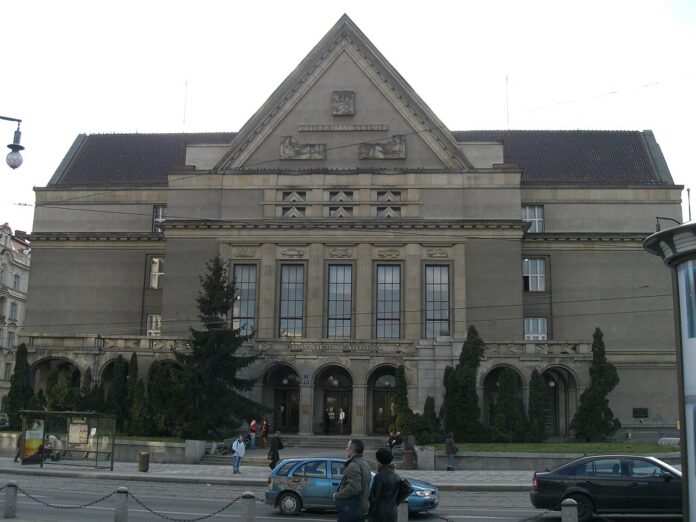

Imagine a university in Europe where the box for fees is empty. No thousands of euros a year, no bank loan, no need for your parents’ land to be sold. Only the admission form, an exam, and free study if you succeed — and this concession is not only for local children; it applies in exactly the same way on your Pakistani, Indian or Bangladeshi passport.
This is not a fantasy. In the Czech Republic a degree at a public university really is free. But at the end of that sentence there is a condition attached that agents never repeat, and this is the place where thousands of our young people build up hope and are disappointed.
The one condition that changes everything
Czech law says: at a public university, the degree programme that is taught in the Czech language is free. There is no restriction of nationality. European or Asian, if you are able to study in Czech and you pass the entrance exam, the tuition fee is zero.
And the other half of the same law: programmes taught in English have a fee — at the same universities, with the same professors, often in the same building. The fee in ordinary subjects is about two thousand to five thousand euros a year, and in fields such as medicine or dentistry it goes up to twelve thousand to twenty thousand euros a year. These figures change every year, so treat them as an estimate and confirm them from the university’s own website.
So “free education” is not a lie. But its price has to be paid not in money but in time and effort: one year in learning the language. The decision is yours — which do you have more of to give, money or a year.
That one year: preparatory language year
Czech is not easy. There are seven grammatical cases, verbs have two aspects, and it has no relation to Urdu or English. But it can be learned, and for exactly this purpose Czech universities have their own institutes that bring foreigners up to university level in one year.
The best known name is ÚJOP, the institute of Charles University, whose centres are in Prague, Poděbrady, Mariánské Lázně and some other cities. Other universities also run similar preparatory courses. For one academic year of an extremely intensive course (usually twenty to thirty-five hours a week) the fee is roughly between four thousand and seven thousand euros, and in many places the hostel rent is included in it.
What is special about these courses is that they do not teach only the language. If you are going into medicine, biology and chemistry are taught to you in Czech; for engineering, mathematics and physics. That is, at the end of the year you are ready for the entrance exam, not merely able to hold a conversation.
The arithmetic is straightforward. The money that one year of preparation costs is equal to one and a half or two years of fees for an English programme. If your degree is three to six years long, the Czech-language road comes out far ahead financially. And a bigger benefit is coming further on.
The language is not only a question of fees — it is a decision about your future
This should be spelled out to every person who is thinking of studying in Europe, and nobody tells them.
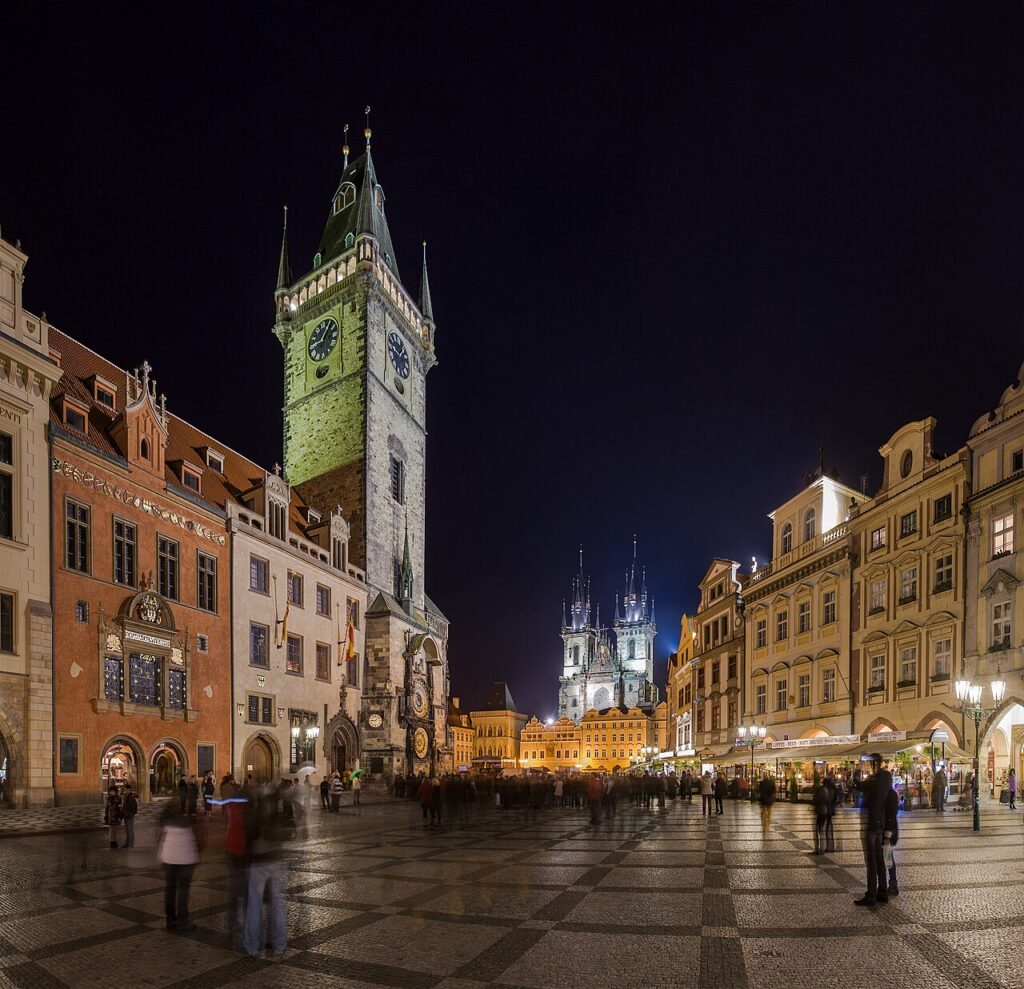
In Prague the office of an international company can run in English. But the hospital, the school, the municipality, the bank, the court, the construction company, the local business — all of these run in Czech. If you did a degree in English for three years and did not learn the language, then after graduation the list of jobs open to you becomes very short, and the ones you do get are usually call centre or customer support type work.
At the stages of permanent residence and citizenship the language becomes a formal legal condition. So the truth is that you will have to learn Czech either in the first year or in the fifth — the only difference is that if you learn it in the first year the education becomes free, and if you learn it later you have paid the fee and done the work as well.
Which universities
These are all state universities, that is, the same institutions where the Czech-language programmes are free and the English ones are on a fee:
- Charles University, Prague — founded in 1348, the country’s oldest and most respected university; medicine, law, social sciences.
- Czech Technical University (ČVUT), Prague — engineering, architecture, computer science.
- Masaryk University, Brno — the second largest university; medicine, informatics, economics.
- Brno University of Technology (VUT) — electrical, mechanical and civil engineering.
- Palacký University, Olomouc — a strong medical faculty in a small, cheap and quiet city.
- University of Chemistry and Technology (VŠCHT), Prague — chemical engineering and food technology.
- Czech University of Life Sciences, Prague — agriculture, forestry, environment.
- Prague University of Economics and Business (VŠE) — business, finance, statistics.
- VSB – Technical University of Ostrava — an old institution for mining, materials and engineering, and the cost of Ostrava is lower than Prague.
- University of West Bohemia, Plzeň — engineering and law; an hour’s distance from Prague.
The official national portal studyin.cz has the list of all approved institutions and programmes. This is the place from which you should verify every institution, not from some agent’s brochure.
The real admission stage — and the paper nobody tells you about
Admission at Czech universities is usually through an entrance exam, especially in medicine and in the popular fields. The exam for a Czech-language programme is in Czech. Do not go thinking that once you have applied you will get in; the competition is real.
The second thing is nostrifikace — that is, getting your previous degree or intermediate certificate recognised in the Czech system. This is a separate official process, it can take months, it requires certification (apostille or legalization) on your old papers and a certified translation, and sometimes you are also examined in one or two subjects. Those who leave this stage to the last moment lose a whole academic year. Start the work of getting your papers certified before you apply.
Proof of funds and the visa
When giving a long-stay study visa, the Czech embassy looks at whether you have the resources to spend one year. This amount usually works out at around one hundred thousand to one hundred and twenty-five thousand Czech crowns (roughly four to five thousand euros), and this account should be in your own name or come with a formal guarantee from your sponsor. Along with it you need the admission letter, proof of accommodation, health insurance and a clean police record.
These figures are reviewed every year. Before applying, be sure to look at the current list of the Czech Ministry of the Interior or of the Czech embassy in your city — do not rely on old YouTube videos.
A realistic monthly budget
These are estimates for Prague. In Brno, Olomouc, Ostrava or Plzeň this cost comes down noticeably.
| Item | Monthly (CZK, approx.) | Note |
|---|---|---|
| University hostel room | 4,500 – 7,500 | A shared room is cheaper, a single one costs more |
| A room in a private flat | 9,000 – 15,000 | More in Prague, less in smaller cities |
| Food | 3,500 – 5,500 | The food at the university menza is the cheapest |
| Health insurance | 1,300 – 2,500 | Compulsory for foreign students |
| Transport | 150 – 400 | The annual pass for students under 26 is very cheap |
| Phone and internet | 300 – 600 | — |
| Books and miscellaneous | 1,500 – 3,000 | — |
| Total (with hostel) | 11,000 – 19,000 | About 450 – 780 euros |
These figures are estimates and the rent is rising every year. Keep your planning a little above them, not below.
Working during the studies
This is one big convenience of the Czech system: a foreign student studying in an approved degree programme does not need a separate work permit in order to work. That is, you can work part time legally.
But do not make it your plan for income. With part-time work in Prague you can cover food and some rent, not a whole degree — and if you do not know Czech the work opportunities become very limited. The language makes a difference here too. At the same time keep in mind that the type of work contract and the tax rules are different in each case; it is better to ask the university’s international office.
What happens after the degree
This is the most important part and people often do not think about it at all.
Czech law gives a graduate a temporary residence permit to look for a job or start a business after completing the studies — usually up to nine months. If you get a job in this period you move on to a zaměstnanecká karta (employee card), and in the case of higher education and a better paid job the road of the EU Blue Card is also there. After that it is renewed year by year, and the years of legal residence are counted onward towards permanent residence.
So the complete road works out like this: the language year, then the degree, then nine months of job searching, then the work permit, then permanent residence. Every step legal, every step in your own name. No agent is necessary in it.
The frauds that run the most here
Those who sell “guaranteed admission”. Nobody can make admission to a public university certain, especially where there is an entrance exam. Whoever makes this claim is either lying or taking you towards some institution whose name you have never heard.
Fake admission letters and bank statements. Some agents take money and “get the papers made”. The embassies verify directly with the university and have their own way of checking bank statements. The result of being caught is not only refusal — a record of forgery can bring a ban of several years for the whole Schengen area. A saving made once closes ten years for you.
Those “colleges” that are really visa agencies. Some small private institutions exist mainly to sell admission letters. The teaching is in name only, the fee is high, and the degree has no value. There is only one way to avoid them: the institution and its particular programme must be on the approved list of the Czech Ministry of Education. Look on studyin.cz, and if the name is not there, the matter ends right there.
The “a work visa will come” story. Some people take a study visa only as an excuse to reach Europe and drop the studies. Remember that your residence permit is tied to your enrolment. The university reports your removal, and the permit ends. The situation that follows is far worse than the one you ran from.
Finally, one plain piece of advice
If you have the time and you are not afraid of hard work — do the Czech language year and take the free degree. If your age or your circumstances do not allow an extra year and you can pay the fee — take the English programme, but from the first day start Czech as well in an evening class. In both cases the road is the same; the only difference is when you learn the language.
And the money people give to the agent who will “send them to Europe” is often far more than a whole preparatory year and the first year’s costs come to together. The difference is that one road ends at a degree and the other at somebody’s mobile number going dead.
The fees, amounts and conditions given here are general estimates at the time of writing and keep changing in every academic year. We can guarantee neither admission nor a visa. Before spending any money or submitting an application, verify the current details yourself from the relevant university’s own website, from studyin.cz and from the Czech embassy in your city.

