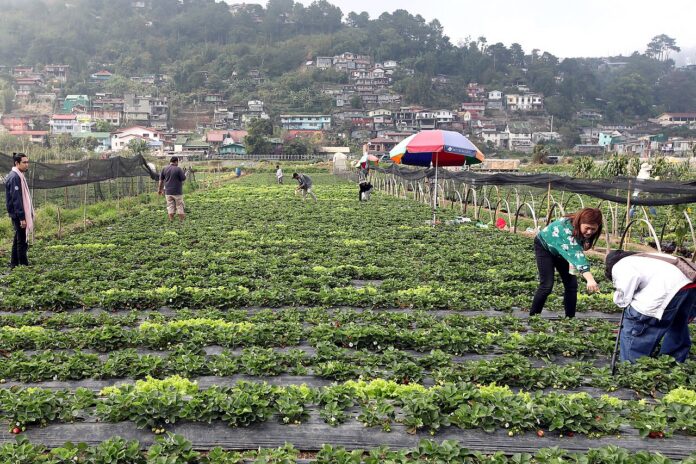

There is one British visa for which you need no degree, no IELTS and no bank balance of lakhs. Six months of field and orchard work, legal wages, and return. This is the Seasonal Worker visa.
And this is exactly why the most noise and the most fraud in the subcontinent is around this visa. Where the conditions are the lowest, the candidates are the most — and where the candidates are the most, the sellers arrive.
In this article, first the thing that is more necessary than everything else, and by reading which many people can save their savings: the real route to this visa is almost free for the candidate. Now let us look at the whole system.
What this visa actually gives
It is for horticultural work — picking and packing fruit, vegetables and flowers — and on it you get permission to work for up to six months. A separate and shorter poultry season also runs under the same system.
But what does not come with it is just as important. This is a temporary visa. It does not lead towards permanent residence. Family cannot come with you on it. The usual routes to extend it or to switch to another visa do not exist. After six months return is compulsory, and this condition is not a soft one.
Every year the government sets a quota for this scheme — of thousands of visas — which is divided among the approved operators. The quota changes every year, so do not take out money because somebody says “a lot of visas are coming this year”; that sentence is spoken every year.
The only real route: a licensed scheme operator
Here the sponsor is not a farm. The sponsors are the government-approved scheme operators — a few specific companies that recruit workers and send them to the farms. Their current list is on the Seasonal Worker visa page on gov.uk, and every operator has its own recruitment website.
The process is four steps:
- Free registration on the operator’s website. Applications open before the season.
- The interview and the screening are done by the operator itself — the ability to do field work and basic English are what is looked at.
- If you are selected you get a CoS, and then you pay the visa fee and apply. The fee has been in the region of £300.
- The IHS is not charged on this visa, and emergency NHS care is available.
Now look at that list again and count where money was spent in it. In one place only — the visa fee. Registration free, interview free, recruitment free. Whatever amount is asked from you beyond the visa fee and the air ticket is itself the mark of fraud. No exception, no “processing”, no “recommendation”.
The fraud market — read this part to everyone at home
In Pakistan and India, “a six-month UK work visa — twelve to twenty lakhs” is being sold openly. Some people do not even regard it as fraud, because the visa is real, the scheme is real, and those who go are real too. Just one thing is hidden.
That thing is this: the operators are legally not even permitted to take recruitment money from a candidate. It is a condition of their licence. So the person who is asking you for lakhs is selling a thing whose price is zero. And since he has nothing to sell, in the end one of three things happens: either he hands over a fake paper, or he shows you an application in somebody else’s name, or after some time he switches off his phone.
Three signs are found in almost every fake offer: a fake “job offer letter” arriving on WhatsApp; the fee being asked for into a “UK account”; and being told that “there will be no interview for you, we have a contact on the inside”. A real operator does not take anyone without an interview, because it genuinely needs a worker who can do the work in the field.
One more situation also arises, and you should be ready for it. In some cases people arrived on a genuine visa, but found out there that at the farm they had been promised there was no work at all. In such a situation routes to change the operator and to lodge a complaint do exist — but to reach them you must have the number. So as soon as you reach the UK, write down your operator’s helpline number, send it to someone in your family as well, and keep it safe.
The reality of the earnings — an honest calculation
Now the real question, for which people read all this. How much is left over?
Wages are paid per hour at at least the legal rate, and the operator is obliged to give at least thirty-two hours of work per week. This is an important protection — even when the season is slow, a lower limit on the hours remains in place.
The rough calculation is that in six months a hard-working worker saves a few thousand pounds after covering costs. The costs include accommodation — usually a caravan, whose rent is deducted from the wages — and besides that food and the ticket. This is a good earning, and for many households it is the year’s support.
But the stories of “lakhs in six months” are exaggeration. And do the arithmetic for a moment: suppose somebody gave an agent fifteen lakhs and took this visa. Six months of savings is less than that amount. That is, that person, having done all the hard work and spent six months abroad, will return home at a loss — and that too on a route which was actually free. This is why giving money to an agent for this visa is not only foolishness, it is a failing deal in terms of the arithmetic as well.
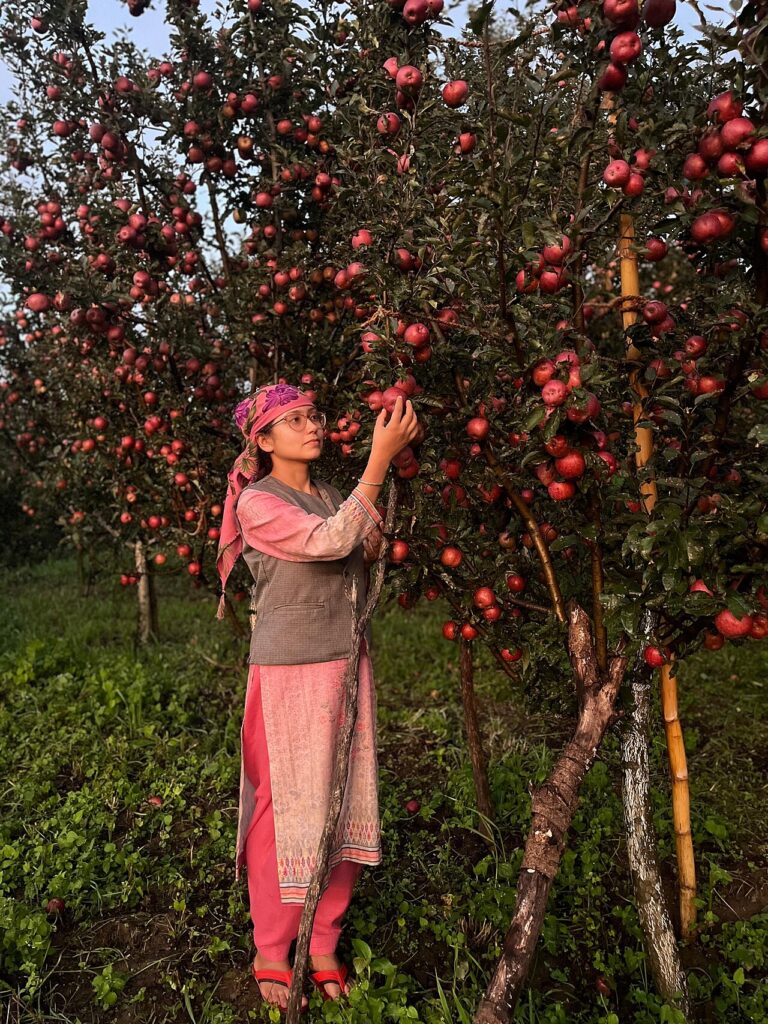
A word about the nature of the work too. This is hard physical labour — hours of picking with your back bent, in every weather, in rain and cold as well. For the person who is genuinely used to field work, this is fine. For the one who sits in an office, the very first week turns out to be decisive. Make this decision about yourself honestly, because leaving in the middle and coming back is in nobody’s interest.
The return is the real key to this route
We are writing this with emphasis, because this is the place where people throw away a good opportunity with their own hands.
The worker who goes back on time is called again by the operators the next year. There are many such people who go every year, and this cycle has become their family’s regular income. Six months of work, six months at home, and the next year the same again. There is no hidden condition in it — just the return.
And the one who stays loses everything. What life without papers in the UK is like, we have written the whole picture of it in our first UK article: legal work closed, bank account closed, house tenancy closed. On top of that there is the separate risk of a ban of up to ten years on future applications.
But the loss does not end there, and people do not think about this part. The operators know which areas the workers who do not go back come from. One man staying makes the way narrower for the next candidates from his village and his area. That is, along with yourself you also finish off the chance of the young man who was going to knock on that same door the next year.
So look at this visa with a clear eye. It is not a door for “seeing” Britain or for “settling” there. It is an honest seasonal agreement: work, earn, go back, come again next year. For the one who goes with that intention, it runs for years.
Preparing the application — practical points
If you have decided to choose this route, then the work can start today, and no agent is needed for it.
- Read the Seasonal Worker visa page on gov.uk yourself — the current list of approved operators is right there, and so is the link to each operator’s own recruitment site.
- Keep an eye on the season announcements, which usually come at the end of winter and in spring. Applications run on a first-come, first-served basis, so the cost of delay is real.
- Keep your passport validity, a clean criminal record and a TB test ready in advance.
- Work on basic English — enough for you to understand instructions. That is what is looked at in the interview, not any exam certificate.
And if somebody at home or in the neighbourhood says “it will happen quickly through me” — then ask him just one question: which operator, and what is the address of its website? If there is a real answer, then you can register there yourself, for free. And that is the moment at which the conversation ends.
This article is for general guidance, not legal advice. This scheme’s quota, the list of approved operators and the fees change every year, and the figures given here are approximate. Always apply according to the verified list given on gov.uk, directly with the operator — and do not give anyone a single rupee in the name of recruitment.

