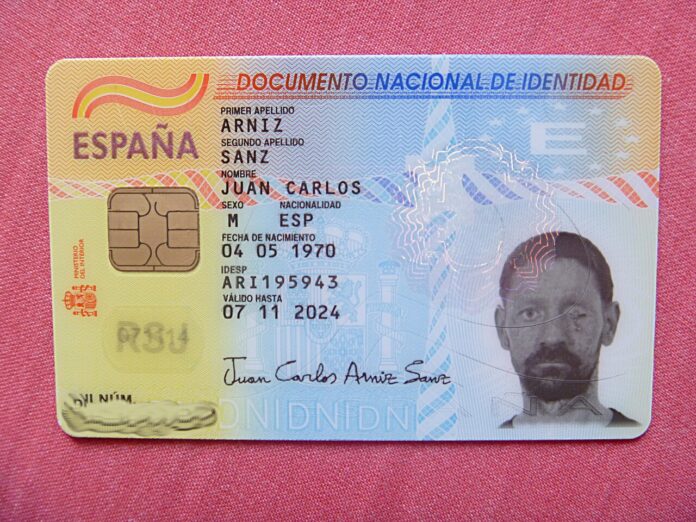

The happiness of the day your papers come through lasts seven or eight months. Then one morning it strikes you that the card is close to expiring, and the same old worry comes back — will you get an appointment, will the contract still be there by then, is the file complete this time. The same cycle goes on for years. A person is legal, but not at ease.
Peace of mind actually arrives at two stages. First, long-term residence — the card whose renewal looks only at the date, not at your circumstances. And second, citizenship — a passport, the right to vote, and the freedom to live and work anywhere in Europe. The difference is that the people who reach these two are usually not lucky. They are simply the ones who did not let a single link break for ten years.
Below is the whole ladder: which stage comes when, what each stage requires, and the small mistakes that wipe out years of counting in one stroke.
What the ladder looks like
Whether the road begins with a work visa, with arraigo or with family reunification, the stages after that are almost the same for everyone:
- The first card — usually for one year.
- Renewals — the cards after that are usually for two years each, on condition that the work or the resources continue and the record is clean.
- Long-term residence (Larga Duración) — after five years of legal and continuous residence. This card is for five years and renews automatically.
- Citizenship (Nacionalidad) — the general rule in Spain is after ten years of legal residence.
Notice that every step stands on the step before it. That is why those early years, which are the hardest, are also the most valuable — they are the base of all the counting that follows.
Larga Duración — the calm that comes at five years
This is the Spanish card after which life really changes. Change your job, change your city, start your own business — the card is not affected. Renewal happens only when the card expires, not on the basis of your circumstances. For someone who has spent five years worrying about a contract before every renewal, this difference is very big.
The requirement is five years of legal and continuous residence. Stop at the word “continuous”, because this is where people slip. In those five years your total absence must be limited — the rough rule is under about ten months in total, and no single trip longer than six months in a row. Confirm these limits officially before you apply, because these are the numbers the whole calculation stands on.
In some situations the counting rules are different. Time spent in an asylum case and years on a student permit are counted by their own rules — student years are usually counted as half. If your years include any such period, working it out by guess is dangerous; have your count done by a lawyer.
And one warning that matters especially for those who travel to Pakistan: even the long-term card is not safe forever. If you stay outside the European Union for more than twelve months in a row, this card can be lost. If some matter at home drags on, if illness comes, if a property case starts — keep this limit in mind and do not treat your return date as a small thing.

Citizenship — ten years and two exams
The general rule is that after ten years of legal residence you can apply for citizenship. For some groups this period is much shorter: only two years for citizens of countries such as those of Latin America and the Philippines, only one year in the case of marriage to a Spanish citizen, and one year for a child born in Spain as well. This last point applies to many of our families — your children born in Spain can become citizens long before you do.
Besides the time there are two more conditions. The residence must have been continuous and legal, meaning no long absences in those ten years and a valid card at the time of application. And the record must be clean — for this a police clearance certificate is needed from both Spain and your own country.
Then come the two exams whose names frighten people, although there is nothing in them to be frightened of:
- DELE A2 — the basic Spanish language exam, held by Instituto Cervantes. A2 means everyday conversation, not literary Spanish.
- CCSE — a test of twenty-five questions on the Spanish constitution and society. What is special about it is that the whole bank of questions is published in advance, so you know where the questions will come from.
The application can also be made online. But be ready for one thing: the decision usually takes one to three years, because there is always a backlog. This wait is mentally tiring, so it is better to put it out of your mind once the file is submitted — and in the meantime to keep your card and your record in order exactly as you did before.
The question of the old citizenship — read this part carefully
This is the most sensitive turn in the whole journey and it is talked about the least. Spain accepts dual citizenship with only a few countries — mainly Latin America and a few historically connected countries. Citizens of Pakistan, India and Bangladesh have to declare at the oath that they renounce their former citizenship.
What changes in practical life after that declaration is a separate question for every family: the matter of the Pakistani passport and NICOP, property in the village or the city, inheritance, bank accounts there, and the ease of visiting elderly parents. For some it is only paperwork; for others it is a very big decision. For Indian citizens the picture is even clearer, because India’s own law does not accept dual citizenship at all (OCI is a separate thing; it is not citizenship).
We are not giving you advice here, and we should not. We are only saying that you should not make this decision in the heat of the moment or on the word of someone you know. Before the date of the oath comes, read your embassy’s current rules yourself and put your particular situation in front of an expert — especially if there is property or a business behind you.
What this means for the family
Citizenship does not remain the matter of one person; it changes the map of the whole household. After you become a citizen, your spouse can apply for citizenship on only one year of residence, without waiting ten years. Minor children become citizens along with you by a relatively easy route.
And the thing many people get wrong: a child born in Spain is not Spanish by birth. The American rule does not apply here. But after one year of legal residence an application for citizenship can be made for that child, which is a very short road. Suppose a couple is living in Spain and a child is born to them — that child’s journey will be far shorter than their own, provided the child’s residence is registered legally from the first day.
The mistakes that eat up whole years
Letting the card lapse. This is the most expensive mistake. If a gap appears in the renewal, the counting of “continuous legal residence” is put at risk, and a question mark goes over years of effort. Always apply for renewal on time — the window opens sixty days before the card expires, and appointments take time to get, so start trying from the first day.
Long trips. Spending seven or eight months in Pakistan does not stay hidden from your record — the passport stamps and the boarding data are there. One such trip can raise a question over a larga duración or citizenship file. If you must go, go, but before going be sure to find out what the absence limit is for your stage.
A mess in tax and social security. All of this is opened up and examined in a citizenship file. Undeclared work, fake receipts, irregular tax — all of it looks easy at the time, but ten years later it costs you at exactly the point where the damage is greatest.
Small fines and cases. A bad record is the most common reason for refusal of citizenship. Fights, repeated fines, some small case — the weight of all of it is felt on the day the file is submitted. In these years your clean record is worth more than your bank balance.
Putting off the exams. DELE A2 is not a hard exam, and the CCSE questions are published in advance. Do not leave these two for the last year. The certificates do not expire, so prepare a little a year or two earlier, pass them and put the certificates in the file — one headache less when the time comes.
A map of the time — an estimate
Suppose someone takes their first card today through arraigo. Their road will look something like this: a first card of one year, then a two-year renewal, then another two-year renewal — five years are complete here and the door to larga duración opens. After that another five years, ten in all, and the citizenship application can be made. A further one to three years for the decision.
That is, even a person who came by the hardest road can reach a European passport in roughly twelve to fifteen years, if they keep the record clean and never let the papers lapse. And for someone who came on a study or work visa, the journey is shorter than this. The period is certainly long, but the right way to look at it is this: these years are going to pass anyway. The only difference is whether at the end of them you have a passport in your hand or another renewal slip.
Official links
- Official rules and application for citizenship: mjusticia.gob.es
- DELE A2 and CCSE exams: examenes.cervantes.es
- Residence and renewal procedures: inclusion.gob.es
- Appointment (Cita Previa): sede administración
The periods and limits given in this article are approximate and the rules keep changing over time. This is not legal advice. In matters such as the counting of residence years, the absence limit and the citizenship oath, one small detail changes the whole outcome — so before making any application have the count of your years and your particular situation checked by a lawyer, and see the current conditions from the official links given above.

