
One question reaches us again and again, and almost in the same words: “You get the passport after five years of study in Portugal, don’t you?”
Before answering it, it is important to see where the question comes from. It does not come from any law; it comes from videos that were made two or three years ago and are still circulating today. The main point comes further down, but in short: amendments to lengthen the period in the citizenship law have been under way, and no serious person can base a life decision on that old number.
But this does not reduce the value of studying in Portugal. The opposite is true: the study visa is still one of the strongest and least used routes to Portugal — it simply should not be seen as a ladder to a passport, but as a decision about education and career.
Why Portugal
The first reason is money. At public universities, bachelor’s and master’s fees usually stay between 1,000 and 3,500 euros a year, depending on the programme. Compared with the United Kingdom or the United States this is many times less. Stop for a moment and think: this is often less than the money people hand over to an agent in the name of “arranging a work visa”.
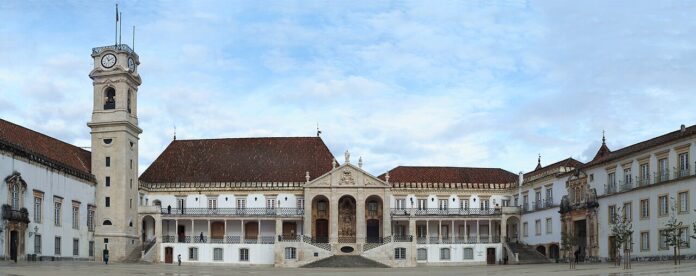
The second reason is the institutions. Names like Universidade de Lisboa, Porto, Coimbra, NOVA, Minho and Aveiro are recognised in Europe. Alongside them are the polytechnic institutes (IPs), which focus on practical education and where admission is relatively easier — for many students this is the more sensible choice.
The third reason is the environment. The country is safe, our community is growing, and in the beginning you can manage with English. But that last point is also a soft trap — students who learn Portuguese go far ahead in two years of those who keep leaning on English.
Admission and visa — the real order of the process
The first step is admission, not the visa. The application is made directly on the university’s own portal: degree, transcript and proof of English — either IELTS, or the standard the institution itself sets. Many institutions charge an application fee, usually around 50 euros.
Read this sentence again: the portal is open and you can make the application yourself. That one sentence exposes all those “admission plus visa guarantee packages” that are sold for hundreds of thousands of rupees. If somebody helps you, a reasonable fee for their work is fair; but the amount that is demanded is not for the work, it is for your not knowing.
After the admission letter comes the turn of the visa file (D4), which is submitted at the consulate or at VFS. In it, the financial proof is the most sensitive part — you have to show that a year’s expenses are arranged, and the rough figure used is around seven thousand euros, or formal sponsorship instead of it. Along with that: the accommodation arrangement, insurance, police certificate and the fee.
A decision can take weeks and it can take months, so submit the file well before the term starts. The reasons for refusal come out the same every time: weak financial papers, an incomplete file, and a gap in the education record that has no explanation. If you have chosen a master’s in computer science after a B.Com, that is possible — but the reason for it must be written in your file, otherwise the officer will assume a reason of his own.
After reaching Portugal the work of the first weeks is straightforward: get the NIF and NISS, complete your enrolment at the university, and start the residence permit process through AIMA. Remember two things here. First, NIF and NISS are free — anyone who asks for money for them is robbing you. Second, the AIMA backlog is real and an appointment or a decision can take months. During this time your support is the receipts and reference numbers that prove you applied on time. And where the wait is long, sellers of appointments appear — do not give one euro to anybody outside the official channel.
Work alongside study
Students are allowed to work alongside their studies — part-time on normal days, more during the holidays. Restaurant, delivery, warehouse and campus jobs are the routes through which most students cover their costs.
But there is one plain piece of advice about the first semester: spend it on settling your studies. Subjects you fail are not only an academic loss; they come back as questions at the time of visa renewal. Many students, chasing higher earnings in the first four months, put the whole year at risk.
What comes after the studies
When the degree is complete you are given room to stay in the country to look for a job, and once a job is found the student permit changes into a work permit. This is the greatest strength of this route: you stay legal from the first day to the last, and you never have to hide at any stage.
In a job in your own field your status becomes stronger with time, and after five years of legal residence an application for permanent residence becomes possible. The student years are also included in this count, but their counting has its own rules — do not do your own count by guesswork, have it done by a qualified adviser, because a difference of a few months changes the timing of the whole application.
And now that question, the one we began with
The old story was short: five years, then the passport. The reality is more careful than that. Amendments to lengthen the period in the citizenship law have been under discussion in parliament, and the proposals have included a longer period for people from non-CPLP countries.
Whatever the outcome, one rule will not change: the decision will be made on the law that is in force at the time of your application, not on the one that was in force on the day you left. So choose Portugal on the basis of study, work and quality of life. If those three things work for you, your decision will still be right after any amendment to the law. And if your whole calculation stands only on counting towards a passport, one vote in parliament can bring it down.
One thing, though, will be needed in every case: a certificate of A2 level Portuguese. This is work that should be started from the first year, because in the final year it becomes a burden.
An estimate of the costs
All the figures given below are estimates and change with the city, the institution and the year — treat them not as a final calculation but as a first map.
| University fees | about 1,000–3,500 euros a year (scholarships and instalments exist at many institutions) |
| Room: Lisbon or Porto | about 350–600 euros a month |
| Room: Braga, Covilhã, Évora | about 200–350 euros a month |
| Food and travel | about 150–250 euros a month (the student mensa [canteen] and the transport pass are quite cheap) |
One conclusion comes out of this table by itself: a student studying in a small city saves, on the room alone, an amount over the year that often works out equal to the whole fee.
Three things to stay away from
- The “admission + visa guarantee” packages. The visa decision is made by the consulate, not by the seller — and the application whose guarantee is being sold is one you can make yourself.
- Unknown “colleges” whose real business is not admission but visas. A file on the papers of such institutions gets refused and the money is lost as well. Before taking admission, confirm that the institution is on the DGES list.
- The “plan” of taking admission and then disappearing. Without attendance and results the permit does not run, and after the old “arrive and then regularise” route closed in 2024, there is nothing beyond it. This is a dead end, not a shortcut.
Official links
- List of recognised educational institutions: dges.gov.pt
- Visa forms and conditions: vistos.mne.gov.pt
- Residence permit and appointments: aima.gov.pt
This article is for information, not legal or educational advice. Fees, financial limits and especially the citizenship law can change, and the figures given here are only estimates. Before sending a fee to any institution or submitting a file, check the latest information from the relevant university and from your own consulate yourself.

