
Right now hundreds of thousands of people are living in Italy without papers. They did not all arrive by the same route. Some came on a legal visa and stayed on after it ran out; some found the nulla osta they had bought was worthless, and when they reached Italy the employer did not answer the phone; and some came by the donkey route. The stories are different, but today they are all standing in the same place.
First let us make two things clear. Both are true and both are bitter. The first is that, unlike Spain, Italy has no permanent, always-open route to getting papers. Spanish law has Arraigo written into it — so many years have passed, put in your application. Italy has no such door. The second is that even so, saying “there is nothing” is also wrong, and it is this misunderstanding that keeps people from the rights they already have today, in the very situation they are in.
So this article sits between those two points: what your rights are, where the biggest danger lies, and which limited doors exist in the law that you can put your hand on.
First, know what is yours by right
The most important matter is medical care, because this is where the most people suffer in silence. In Italy a person without papers can get an STP code (Straniero Temporaneamente Presente) and through it receive emergency and essential treatment. The hospitals issue this code themselves, and the police are not informed about it. The protection is even greater for pregnant women and children. People sit at home in pain, afraid that if they go to hospital they will be caught — that fear has no basis, and it costs them dearly.
The second matter is children. In Italy every child has the right to go to school, whatever the parents’ papers may be. No school can block admission by asking whether you have a permesso.
The third matter is wages, and this is the right that is robbed most often. Making someone work and not paying them is a crime in Italy, and it remains a crime even when the worker has no papers. The union offices — CGIL, CISL, UIL — help workers without papers too. The employer often gives the same threat: “you have no papers at all, where will you go?” He knows that you do not know your rights.
And if a deportation order comes, it is not an immediate or final thing. There is a right of appeal and there is a time limit. As soon as the paper is in your hand, go to a patronato or a lawyer, and do not sign any paper you cannot understand.
Caporalato — the biggest danger, and the thing few people know
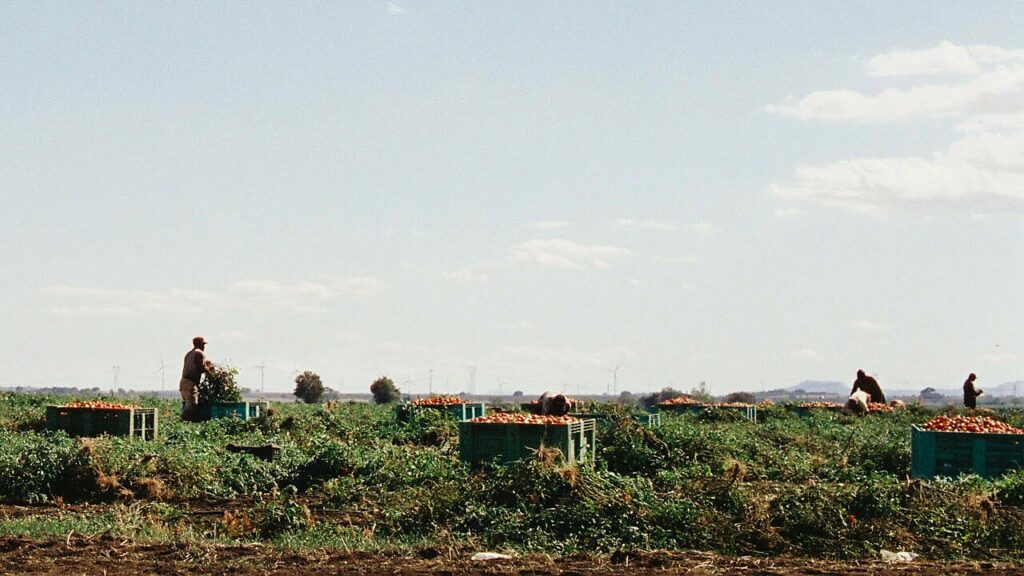
In the agriculture of southern Italy the system of the caporale, the gangmaster mafia, is notorious. Its shape is the same everywhere: ten to twelve hours of work a day, a small daily wage, and deductions even from that wage in the name of transport and water. Housing in some shanty settlement, from which the way out is in the same gangmaster’s hands. Little by little a person reaches a state where he can neither stay nor leave.
Now the thing that people trapped in this system often do not know. In Italy caporalato is a crime — the criminal is the gangmaster, not the worker. And more important still, Italian law has a special protection and residence permit for victims of serious exploitation (protezione per sfruttamento lavorativo). That is, in such a case the person who reports it can get papers, not punishment.
This is worth repeating, because the exploiter draws all his power from that one fear: “if you complain, you are the one who will be thrown out.” In reality the law is turned against him. Unions and NGOs stand with people in such cases, and there is no need to take this step alone either — go to their office first and talk to them.
The limited routes that exist in the law
These routes are few, they are narrow, and each has its own conditions. But they exist, and what exists should be known.
Special protection (Protezione Speciale)
This category is for people whose return home would be inhuman — family and social roots, state of health, or a real danger in the home country. The honest thing to say here is that recent governments have made it very limited. The old videos are still on YouTube today explaining how easy this route is; those easy conditions are gone. But the category has not disappeared altogether either. The decision depends on the details of each case, so do not put your hand into it without a lawyer.
Asylum
If the grounds are true, this is your right. The commission holds an interview, and in case of refusal an appeal runs in court. But a case built on economic reasons is almost certain to be refused, and years of uncertainty come to you separately along with it.
Permits on health or family grounds
In certain particular situations there are separate permits — serious illness, marriage to an Italian citizen, or being the parent of an Italian citizen child. These are not general routes, but anyone to whom these circumstances apply should know that something like this exists.
Sanatoria — and the business done in its name
Italy has opened regularisation schemes for undocumented workers several times in the past; the last big scheme came in 2020. That is why the hope stays alive that the next one will come too.
But the truth is that these schemes carry no promise and no calendar. And in that same gap one rumour goes round every year: “a new sanatoria is coming, put your name down now, later there will be a queue.” Some people take money in advance on this rumour — for a thing that does not even exist yet. On the day a scheme really does come, it will be announced through official sources and everyone will learn of it at the same time; nobody has “inside news” in advance.
The rule is simple: do not give a single rupee on a rumour, and accept an announcement only from an official source. And if a scheme ever does come, get your file made free of charge at a patronato on the very first day, because such schemes ask for the employer’s cooperation and for proof of residence and work — and that brings us to the next point.
Keep collecting proof, starting today
Even though Italy has no permanent route, there is one thing you can do today whose benefit will show in every possible situation: keeping your papers. Medical records, money-transfer receipts with your own name on them, a certificate from some course, a housing contract, union membership — every paper that carries a date.
In every past sanatoria, and in every special category that exists today, the decision turns on one thing: proof of presence and of work. The official sitting in the office does not listen to what you say, he looks at paper. Make one file and keep putting everything into it. The truth is that when the need comes you will not remember which receipt was where. An ordinary paper of today can become the basis of tomorrow’s card.
“So should I go to Spain?”
This question is asked a lot: papers are not being made in Italy, and Spain has arraigo — is going there the solution?
Understand one thing clearly. Spain’s arraigo asks for years spent in Spain. Your years spent in Italy are not counted there. If you spend four years in Italy and then go to Spain, your count will start from zero, as if you had reached Europe only yesterday. Besides that, travelling without papers inside Europe is a risk in its own right.
The point is not to say the decision is wrong or right — that depends on your own circumstances. The only point is that you should not make the decision on the idea that “as soon as I get there the papers will be made”, because it is not like that. Make the decision after understanding the law of both countries; our articles on Spain’s Arraigo and Empadronamiento were written for exactly this reason.
Where help is available — and free
This last part is the most practical, and it is often the least used. Our people avoid these offices and instead give thousands to someone they know for the very same work.
- Patronato offices (ACLI, INCA-CGIL, INAS): free help with paperwork, and they exist in every city
- Caritas and Comunità di Sant’Egidio: food, shelter, language classes and guidance
- ASGI: an association of immigration lawyers — for complicated and delicate cases
- Union immigration desks: for matters of wages and exploitation at work
Going to these offices is not used against you. These people see such cases every day and they know what has changed in the law and what has not — something no WhatsApp group will ever know.
This article is to make you aware of your rights and of the law as it stands. It is not legal advice, and it contains no encouragement or guidance for entering or staying anywhere by any illegal means. Italy’s protection categories have changed again and again in recent years, and one small detail changes the whole decision. Before filing any application, be sure to show your case to a patronato office or a lawyer.

