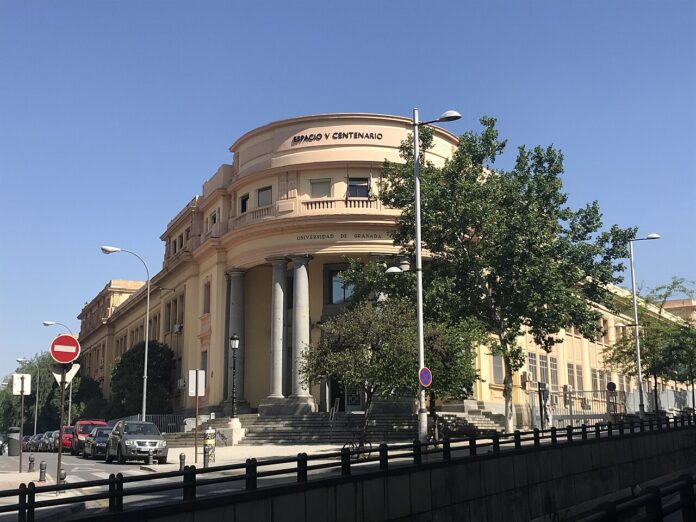

Two things are commonly said about Spain among our people, and both are half true. The first is that «studying in Spain is free» — no, it is not free. The second is that «studying in Europe is only for the rich» — this is also wrong, because the annual fee at a Spanish public university is often less than the amount people hand over to an agent for nothing more than a «consultancy».
So what is the real arithmetic? Let us open it up — how the fee is charged, which region is cheaper, how much it costs to live, and how much of your own cost you can cover by working alongside your studies.
Let us make one thing clear first: this article is about cost and universities. The visa procedure, the documents and the interview we have written about in detail in a separate article, «Spain study visa: admission, cost, permission to work and the route to permanent residence». Read both together.
How the fee is charged — understand the «credit» system
At a Spanish public university the fee is not a single lump sum for the year. Here every subject carries a number of créditos (credits), and the fee is charged per credit. A year is normally 60 credits. That is, the more subjects you take, the more fee you pay.
This has one practical benefit that very few people know about: if you are studying alongside work, you can take fewer credits (matrícula parcial), halve the year’s fee and stretch the degree out a little longer. This is very useful for those who are paying their own way.
The second important point: the fee rate is not the same across all of Spain. Each autonomous region (comunidad autónoma) sets its own rate. That is why the same degree can be expensive in Madrid and cheap in Andalucía.
The actual figures (approximate)
| What | Public university — roughly per year |
|---|---|
| Bachelor’s (Grado) | about 700 – 2,000 euros |
| Master’s (Máster oficial) | about 1,200 – 3,500 euros |
| Private university | about 6,000 – 20,000+ euros |
These are estimates, not lines carved in stone. The cheaper regions are usually Andalucía, Galicia and Extremadura; the more expensive ones are usually Catalonia and Madrid. There is one more difference with master’s degrees: those master’s programmes that give the legal licence to practise a profession (habilitante, for example to become a teacher or a lawyer) often have a lower fee, and the other master’s programmes a higher one.
One thing you must check: in some regions non-European students are charged a higher fee, and in some they are charged the same as local students. This directly affects your pocket, so confirm the amount by looking at precios públicos or tasas on the page of the very university you are applying to.
The difference between public and private — this is where most money is wasted
In Spain the fee at a public (pública) and a private (privada) university can differ by as much as ten times. Unfortunately agents often send people towards private institutions, because that is where they get their commission.
Public universities are generally more respected, their degree is recognised everywhere, and the difference in fee comes out of your own pocket. When someone recommends an institution to you, always ask one question: is it pública or privada?
Also check that the institution and your degree appear on the ministry’s list of recognised institutions — official information is available here: universidades.gob.es
The cost of living — this is the real cost
The truth is that in Spain the fee will not be your biggest expense. Housing will be. And the cost of housing changes dramatically the moment you change city.
| Cost (per month, approximate) | Madrid / Barcelona | Smaller cities |
|---|---|---|
| Shared room | 450 – 700 € | 250 – 400 € |
| Food | 200 – 300 € | 150 – 250 € |
| Transport (student pass) | 20 – 55 € | 20 – 40 € |
| Mobile, internet, miscellaneous | 60 – 100 € | 50 – 80 € |
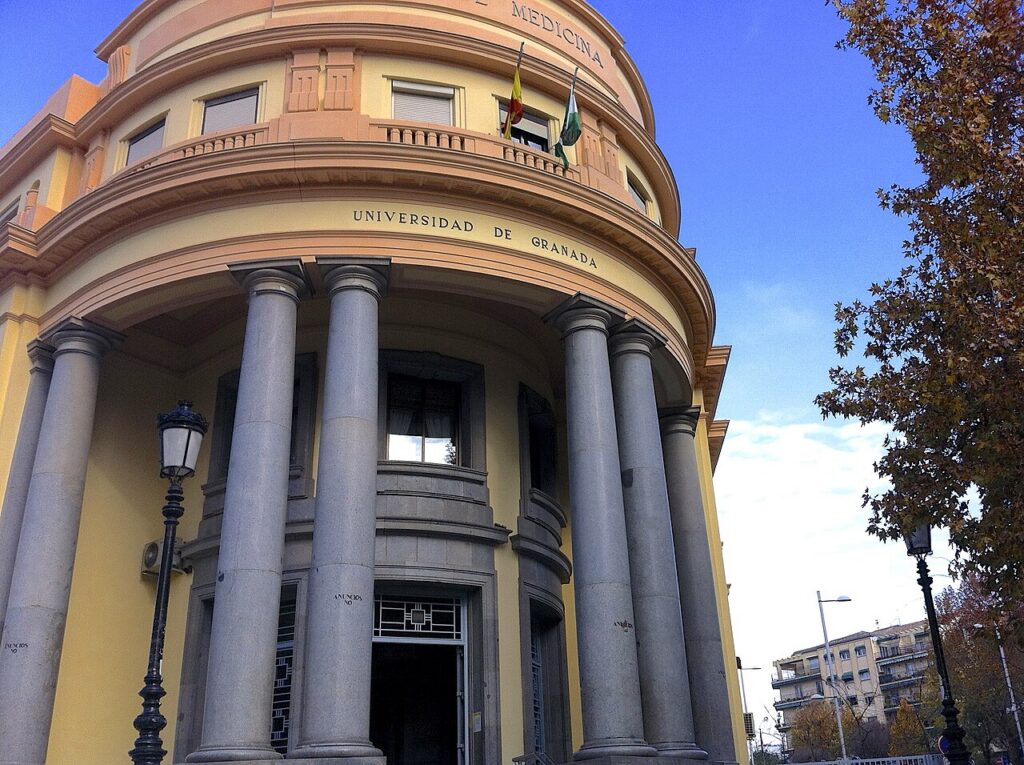
Here is one solid piece of advice that can save you thousands of euros: the public universities of cities such as Granada, Salamanca, Valencia, Sevilla, Zaragoza or Córdoba are second to none in quality, yet rent there is roughly half of what it is in Madrid and Barcelona. Many students choose a big city only for the name, and then drop out of their studies under the weight of the rent.
Working while studying — Spain’s greatest advantage
This is the point on which Spain pulls ahead of many other European countries. In Spain a student permit allows you to work up to 30 hours a week — in Germany, Italy and France this limit is usually 20 hours or the equivalent.
Ten extra hours sound small, but at the end of the month that difference is often equal to the rent. In practice this means that a hard-working student in Spain can cover a good part of their living costs themselves.
But one honest point: to work you need Spanish. You can study in English, but work in a restaurant, a shop or a warehouse does not come through English. Start on Spanish from day one.
Scholarships
Scholarships do exist in Spain, but there are no programmes like those in Germany or Hungary. The things that actually help:
- The university’s own scholarships — almost every large university keeps some fee reduction for foreign students; look for becas on the admissions page
- Regional government scholarships — some autonomous regions give support to their students
- MAEC-AECID — the international scholarships of Spain’s Ministry of Foreign Affairs
- Erasmus+ — if you are already at a European institution
Information on international programmes is available on the website of the official education body SEPIE: sepie.es
Some well-known public universities
- Universidad Complutense de Madrid — among the largest universities in Spain
- Universidad Autónoma de Madrid
- Universidad Carlos III de Madrid — notable for English-language programmes
- Universidad Politécnica de Madrid — engineering
- Universitat de Barcelona
- Universitat Autònoma de Barcelona
- Universitat Politècnica de Catalunya — engineering and architecture
- Universitat de València
- Universidad de Granada — the best choice among the cheaper cities
- Universidad de Salamanca — founded in 1218, a famous centre for learning Spanish
- Universidad de Sevilla
- Universidad de Zaragoza
At the universities of Catalonia (UB, UAB, UPC) some programmes are taught in Catalan — always check the language of instruction before applying; finding this out later costs you a year.
What after the studies?
This is Spain’s second big advantage. After completing your degree you do not have to leave the country immediately — there is a route to extend your stay in order to look for a job or start your own business, and once you find a job the student permit is converted into a work permit.
More important still: your years as a student count as legal residence, and later on they count towards long-term residence and citizenship (the counting of student years has its own rules — the details are in our article on permanent residence and citizenship). That is, a study visa is not just a degree, it is a whole route.
Be careful — these mistakes are expensive
Agents selling an «admission guarantee». The admission portals of Spain’s public universities are open and you can apply yourself. A «consultancy» costing hundreds of thousands of rupees is often nothing more than filling in the same forms you could have filled in yourself.
Fake bank statements. The embassy checks financial documents. If you are caught, it is not only the visa that is refused — your record is damaged and future applications are affected too.
Taking admission and then disappearing from the college. Some people treat the study visa merely as an excuse to get in. But when the permit is renewed, attendance and examinations are looked at — if you abandon your studies the renewal stops and the person ends up without papers. That is exactly the situation this route was chosen to avoid.
Ignoring degree attestation. A Pakistani degree and certificates require attestation and a certified translation (traducción jurada). This takes weeks — start well before the application deadline.
So who is Spain right for?
If you want completely free education then Germany or the Czech Republic are better for you — we have separate articles on both. Spain’s fees are not free, but they are low.
Spain is best for the person who wants to cover their own costs by working alongside their studies (the 30-hour permission), who finds it easier because of the warm weather and the presence of a large Urdu-speaking community, and who wants to stay on in the same country after the degree and move forward there. And if you choose a smaller city, all of this arithmetic becomes easier still.
This article is for general guidance — it is neither legal advice nor educational advice. Fee rates are set each year by each autonomous region itself, and conditions for non-European students differ from place to place. Before applying, confirm the amounts and conditions from the relevant university’s own page, and for visa matters see the latest instructions from the Spanish embassy.

