
Let us start with something many people find hard to believe: a whole year’s fees at a public university in France can be less than what one term at a good private college costs back home. The French system is built on the idea that higher education is the state’s responsibility, and this principle has not been limited to French citizens only.
But there is a catch here, and this catch is the most useful part of this article. A few years ago France set a separate, higher fee for non-European students. On paper this is about €2,902 a year for a licence (bachelor’s) and about €3,950 for a master’s. This is the figure you see written everywhere, and this is what makes people change their minds.
What is not written is that many public universities have granted an exemption from this higher fee and charge non-European students the same low fee that French students pay — that is, about €175 to €250 a year. Every university has the right to make this decision itself. Some exempt everyone, some exempt a part, some none at all.
This simply means that before choosing a university in France you have one extra question to ask: does this institution exempt non-European students from the differentiated fee? You can ask this by email to the university’s international office, and the answer makes a difference of thousands of euros a year for you. Do not guess — ask.
Campus France — you cannot get around it
For students from dozens of countries, including Pakistan, India and Bangladesh, admission and the visa for France go through a single route: Campus France and its “Études en France” portal. You create an account here, fill in your academic details, choose universities, and then there is an academic interview.
Do not take this interview lightly. It is not a language test; it is a test of your intent. You will be asked why you chose this subject, why this city, what the connection is between your earlier education and this course, and what your plan is after it. This is the most common reason for refusal in applications from South Asia — a student who cannot properly explain his own study plan. The second big reason is weak proof of funds.
The Campus France fee amounts to a few hundred euros and you submit this application yourself. No agent can sit the interview in your place. Remember this.
CROUS — the real answer for housing and food
The biggest expense in a student’s life in France is rent, and the biggest answer to it is CROUS — the state body for student welfare. CROUS runs:
- university halls of residence (résidence universitaire) — at far below open-market rents
- university restaurants (Resto U) — where a full meal costs a few euros, and even less for grant holders or low-income students
Hall places are limited and the application dates open in spring. Being late does not only mean waiting; it means being forced into an expensive private room, and in Paris that difference is very large.
Along with this there is something else that is rarely mentioned back home: the CAF housing allowance (APL/ALS). In France foreign students too, with a legal residence permit, can be eligible for monthly state help with their rent. The amount depends on the rent, the city and your income, but it often reduces a significant part of the rent. The application is made online after you arrive, and it requires a proper tenancy agreement and a bank account. A student who lives without an agreement, “in a friend’s room”, loses this help.
Which universities to look at
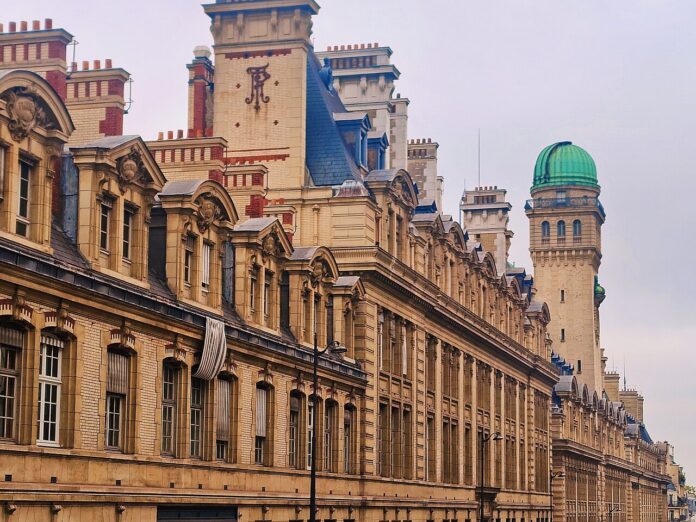
France’s public universities are large, research-based and internationally recognised. A few well-known names:
- Sorbonne Université — Paris, science, medicine and humanities
- Université Paris Cité — Paris’s large general university
- Université Grenoble Alpes — strong in engineering and computer science
- Université de Strasbourg
- Université Claude Bernard Lyon 1 — science and medicine
- Université de Lille
- Université de Bordeaux and Université de Montpellier — large institutions, cities cheaper than Paris
- Aix-Marseille Université — one of France’s largest universities
One clear piece of advice: the name of Paris is big, but the rent in Paris is bigger still. In cities like Lille, Strasbourg, Grenoble, Montpellier or Rennes you get the same public degree, the same student rights, and a far lower cost of housing. If your budget is tight, the choice of city matters more than the choice of university.
Language — English gets you admission, French gets you a life
At master’s level there are a good number of English-taught programmes in France, especially in engineering, data, business and international relations. At bachelor’s level it is the other way round — most licence programmes are in French and they usually ask for proof of B2 level (DELF or TCF).
Now the same hard fact that applies to every European country, but even more strictly in France. In France work is found in French. A part-time job, talking to a landlord, renewing a permit at the préfecture, the bank, the doctor, the CAF form — all in French. Even with a degree in English, a person who does not learn French does finish his studies, but he never takes root in the country. A language course is not something to begin after you arrive; it is something to begin before you go.
An idea of the costs
These figures are approximate and change a great deal from city to city. Check the current figures yourself before applying.
| Item | Small/medium city (monthly) | Paris (monthly) |
|---|---|---|
| CROUS hall room | about €150–250 | about €250–400 |
| Private studio / shared flat | about €350–500 | about €650–900 |
| Food (Resto U + groceries) | about €150–220 | about €200–280 |
| Transport (student pass) | about €20–35 | about €35–50 |
| Social security + top-up insurance | State registration is free; mutuelle about €100–300 a year | |
| Mobile, books, miscellaneous | about €40–70 | about €50–90 |
One piece of good news: registration of foreign students in France’s state health system (Sécurité sociale étudiante) is free and is done online. After that an optional mutuelle covers the rest of the cost.
For the visa the consulate asks for proof of monthly resources — at a rate of about €615 a month, that is around €7,400 for one year. This money can be shown in your own account, in your parents’ account with a sworn declaration, or in the form of a scholarship letter. What matters is not having the money but the history and story of the money: where it came from, when it came, and whether the family’s income explains it. Money that appears suddenly is a straight road to refusal.
Working during your studies
Permission to work is included automatically with a French study permit — you do not have to obtain a separate authorisation. The limit is set in hours per year, which works out at about 60 per cent of a full working year (in practice around twenty hours a week on average). Confirm the current figure from official sources each year.
The common sources of work are the usual ones: restaurants, supermarkets, delivery, childcare (baby-sitting, where French is essential), and library or administrative work inside the university. France has a set minimum wage and legal work pays it. Accepting work without a contract harms you in two ways — lower pay, and no proof of income at the time of renewal.
After the degree
After completing a master’s or an equivalent degree, France gives a temporary permission under which you can look for a job or start your own business — it is usually called an autorisation provisoire de séjour or the “recherche d’emploi / création d’entreprise” permit. During this time you do not need an employer; you are legally resident in your own right.
When you find a job this permission turns into a regular work permit, and for a student who has studied in France this process is far more straightforward than for an applicant coming from outside. The length and conditions of this permission have changed over time, so do ask your préfecture for the current details, and apply immediately after your degree, not late.
Scams — which our people fall for every year
Lakhs of rupees in the name of admission. You submit the Campus France application yourself, and its official fee is limited. An agent who asks for ten or fifteen lakh rupees for the same work is selling a form that lies open to you. Ask him what he is doing besides filling in the form; the answer is usually nothing.
Fake admission letters. The French system is centralised — the consulate sees your admission directly from the portal. A letter made up outside it is caught in a minute, and the result is not only a refusal but a record of fraud against your name.
Doctored bank statements. Borrowing money, parking it for a few days and attaching the statement is the most common “advice” agents give. If you are caught, a ban of several years across the whole Schengen area is possible — meaning one lie closes the doors of France, Germany, Italy and Spain all at once.
Admission only for the visa. Some people enrol in any cheap course, arrive, and never go to class. In France, at the time of permit renewal you are asked for proof of academic progress. If there is no progress the renewal is refused, and the person who came legally is now without papers — he cannot work, cannot rent a home, and cannot easily come back. This is the most expensive “shortcut” of all.
Institutions that are not universities. Some private “business schools” in France charge heavy fees and their degrees have a weak official standing. Before enrolling, check whether the institution is recognised by the state, and whether the degree is nationally recognised (diplôme national).
A worked example
Suppose a student does a master’s in Lille, confirms with the university beforehand that non-European students there get the lower-fee exemption, takes a CROUS room in time, and applies to CAF as soon as he arrives. His annual fee is a few hundred euros, his rent is at the state rate, and part of that is coming back to him. Now if the same student took a private studio in Paris and did not choose a university with the exemption, the difference in a single year would run into thousands of euros.
This is a made-up sketch, not the story of a real person. But it repeats the same point: in France it is not the degree that decides the cost, it is your three choices — the university, the city, and applications made on time.
The first step today
- Open your country’s page on Campus France and write down this year’s table of dates — it usually starts several months before admission.
- Email the international office of two or three universities and ask whether they exempt non-European students from the higher fee.
- Note the date of the CROUS housing application — it can come before the admission decision.
- Start a French course now, even if your programme is in English.
- Arrange your proof of funds months in advance, and write out the answer about your study plan enough times that you can say it without stopping.
For official confirmation: campusfrance.org and service-public.fr.
The fees, monthly thresholds and working hours given here are approximate and in France they change almost every academic year. Remember in particular that each university decides the lower-fee exemption for itself — do not apply one institution’s situation to another. Before spending any money or submitting any application, ask the relevant university, the Campus France office and the French consulate in your city for the current details yourself. This article is for information; it is not a promise of admission or a visa.

