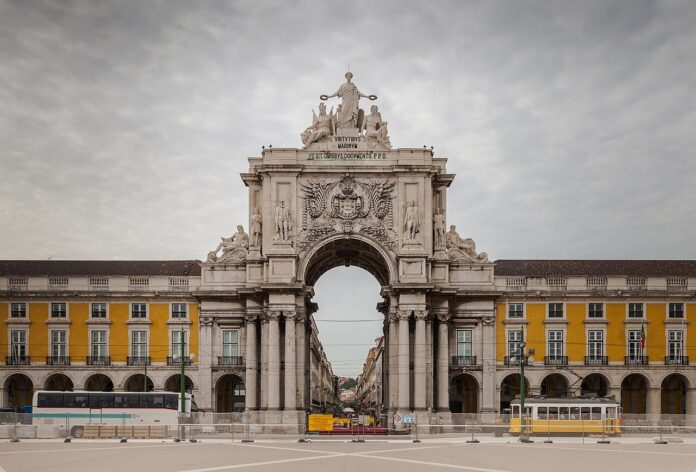

One sentence still goes round the Facebook groups every week: “Portugal is wide open, just get there somehow, the papers get made there.” That sentence was once half true. Now it is entirely false.
For years Portugal ran a system in which even a person who had arrived without a visa could, by showing work and social security payments, get his papers over time. In 2024 that route was closed. The agent who is still selling you the dream of “get there and regularise” is taking money for a thing that no longer exists. Read on with this in mind, because the whole of the rest of the discussion turns on this one change.
And this is where the importance of the job seeker visa begins. It is one of those few doors in Europe that opens legally even without a job in hand. You take the visa and arrive in Portugal, you stay there and look for work, and if you find a job you move towards a residence permit while remaining inside the country — you do not have to come back and get a fresh visa.
What this visa actually gives you
It is not a tourist visa, nor is it any permanent permission. It is a national visa for one particular purpose, and that purpose is only this: looking for a job. On it you get 120 days, which can be extended by a further 60 days. That is, about six months in all.
Six months sounds like a long period. In practice it is not long. Out of it the first two or three weeks go on paperwork — getting the numbers, fixing accommodation, the bank. So the very first thing to understand is that this visa does not give you time to rest, it gives you time to look for work.
What the application requires
The application is submitted at the Portuguese consulate in your own country or at its visa centre (VFS). The form is the national visa form and the fee comes to somewhere around 90 euros. Both the fee and the conditions change with time, so always check the list against the consulate’s own website.
The most sensitive part of the file is financial means. You have to show that you can meet your own expenses until you find a job. The measure is tied to Portugal’s minimum wage; as a rough estimate, reckon that an amount equal to about three months of the minimum wage or more should be in an account in your own name, and its source should be lawful and explainable. If there is a sponsor, his papers go with it.
Let us say one thing plainly here. Having someone you know put money into your account for a few days and then taking out a statement is a trick that consulate staff see every day. A large sum that has appeared suddenly does not strengthen the file, it makes it suspicious.
The rest of the documents are relatively straightforward, and this is a list that really is a list:
- A return ticket or proof of booking — the very logic of the visa is that if you do not find work you will go back.
- Arrangements for staying in Portugal: a hotel or room booking, or an invitation from a relative.
- An attested police character certificate.
- Travel insurance.
- A CV and an explanation of which field you will look for work in.
Do not take that last point as a formality to be filled in. A file in which the CV, the experience and the intention are connected to one another is far stronger than the file in which a young BA graduate writes that he is going to do welding. Realism is itself a document.
The ground reality, which no agent tells you
Slots are limited, applications are very many, and the wait is long. Refusals happen too, and their reasons turn out to be the same every time: weak or suspicious financial papers, an incoherent file, and forged documents.
This same rush has created a whole business. If somebody tells you that he has a “confirmed slot” or that he is giving a “guarantee”, it is a lie — the appointment system is one and the same for everyone and nobody holds a personal quota in it. A guarantee can only be given for a thing that is in the seller’s power, and the visa decision is not in any agent’s power.
The first weeks after reaching Portugal
The very first job on arrival is the NIF, that is the tax number, which is issued at the Finanças office. After that the NISS, that is the social security number, which is obtained from Segurança Social and without which legal work is not possible. Always remember one thing about both these numbers: they are free, at most a very small fee. The people who ask a hundred or two hundred euros for them are not selling a service, they are selling your ignorance.
The third task is registration with IEFP, that is the state employment service. As a job seeker this registration is not only useful; at certain stages it is also expected of you.
After that the real work begins. Work is found on websites like net-empregos.com, indeed.pt and OLX, through agencies like Randstad and Adecco, and through community contacts — and the truth is that a few particular sectors are the first to take newcomers: agriculture (the farms of Odemira and Alentejo), construction, hotels and restaurants, warehouses and factories.
You have found a job — now what
As soon as the contract is signed comes the stage of applying for the residence permit, which runs through AIMA. The things required are the same: the contract, NIF and NISS, registration with social security, proof of housing and a clean record.
But here there is a reality that people are not mentally prepared for. AIMA’s backlog is very large. Getting an appointment and the decision coming can take months. Throughout this whole period your only support is those proofs and receipts which show that you applied on time. Keep every receipt, every email, every reference number.
And where the wait is long, sellers appear there by themselves. There are people selling AIMA appointments and selling them dear. Do not give money for it to anyone other than the official channel.
If you do not find a job in six months
The legal answer is plain and bitter: you have to go back. And the person who goes back with a clean record can apply again. The one who stays on spoils his Schengen record — and after that getting any door in Europe to open becomes far harder than before.
Recall here again that old point with which this article began. Staying on had a benefit at the time when a road opened ahead for the person who stayed. After 2024 that road does not exist. Now staying on is only a loss, not a strategy.
So be serious from the first day: start the search as soon as you arrive, keep a record of every interview and every application, and instead of insisting on the big cities, look first at those smaller towns and regions where there is a real shortage of people who work with their hands.
Three things that will save you time
First, Lisboa and Porto are against you. In these two cities the rents are so high that a newcomer’s whole capital goes into a room. In smaller towns that same money lasts many more months, and often the work is there too.
Second, start learning Portuguese today. In an interview even a “bom dia” makes a difference, and further on, at the citizenship stage, an A2 certificate is asked for anyway. The thing you will have to do out of necessity two years from now, do it gladly today.
Third, read every contract before signing it and after that keep checking your recibos, that is your pay receipts, and your social security payments regularly. These are the very papers that are the basis of the renewal of your residence permit, and later on of bringing your family too. Work done for cash does something for your stomach; it does nothing for your file.
Official websites — verify from here
- Visa information and forms: vistos.mne.gov.pt
- Immigration agency: aima.gov.pt
- State employment service: iefp.pt
This article is to explain the route to you, not legal advice. All the figures given in it are approximate — fees, financial thresholds and conditions keep changing, and they often change without any noise. Before preparing your file, be sure to check the current list against the official website given above or with your consulate.

