
One thing about Italy first, because it differs from Spain and Portugal: Italy has no statutory minimum wage. What you are owed comes from the collective agreement (CCNL) for the sector you work in. We print no figure on this page — we tell you where the figure lives and how to look at it.
Where your pay is written down
CCNL — Contratto Collettivo Nazionale di Lavoro
Every sector in Italy has its own national collective agreement — the CCNL — and the minimum pay for each grade (livello) is written in it. Restaurants, construction, agriculture and domestic work each have their own. You can read them yourself: CNEL keeps the national archive of collective agreements, which is the official source and holds the authentic texts as deposited by the organisations that signed them. The direct question to ask an employer is: “Quale CCNL si applica e quale livello?” — which CCNL applies, and which grade? Not getting an answer is itself a signal.
Reading your busta paga
Every month you should receive a busta paga. It is proof that you worked, at what grade, and for how much. Keep them — a PDF or a photo counts if you get nothing on paper.
| Livello / Qualifica | Your grade. The minimum pay is tied to it — check it against the CCNL. |
|---|---|
| Retribuzione lorda | Gross pay, before deductions. |
| Paga base | Base pay. |
| Straordinari | Overtime. If you worked extra and this line is empty, ask. |
| Contributi INPS | Social security. If the line does not exist at all, you are probably working "in nero". |
| IRPEF | Income tax. |
| Netto in busta | The net amount. This is what should reach your account. |
Since 1 July 2018 an employer in Italy may not pay wages in cash. Whatever the contract and whatever the amount — an advance included — the money has to arrive by a traceable route: a transfer, a cheque, or payment over a bank or post-office counter on the employer’s own account. The labour inspectorate enforces it.
That rule is useful to you beyond the principle: cash in an envelope leaves no trace of what you were paid, and the trace is what a claim is built on. Keep your own daily record of hours as well.
If you are not paid
You can claim unpaid wages even without documents. Under Italian law pay is still owed for work actually done, even where the work was not properly authorised — the work happened, so the wages are due.
The concrete step is the richiesta di intervento ispettivo — a request that inspectors look at the workplace. It is filed at the Ispettorato territoriale del lavoro for the province where you work, by the worker, a union representative, or anyone else who knows of the breach. Attach everything you have: the contract, the busta paga, your own sheets of hours and days worked, witnesses. The form is published online in several languages, and it is sent by post or email with a copy of an identity document. It cannot be used to challenge a dismissal — that is a different route.
We still print no time limit, because it depends on what exactly you are claiming. Ask a patronato before you count days; there it is free.
Where to get free help
- Patronato — the Ministry of Labour’s official list — there is a recognised list, and this is it. The ones you are most likely to find in any town are ACLI, INCA (linked to the CGIL union), INAS (CISL) and ITAL (UIL). A patronato does not charge you for this kind of help.
- CGIL — A large trade union, with dedicated migrant offices.
- Ispettorato Nazionale del Lavoro — The national labour inspectorate. A complaint can be filed here.
Severe exploitation and forced labour
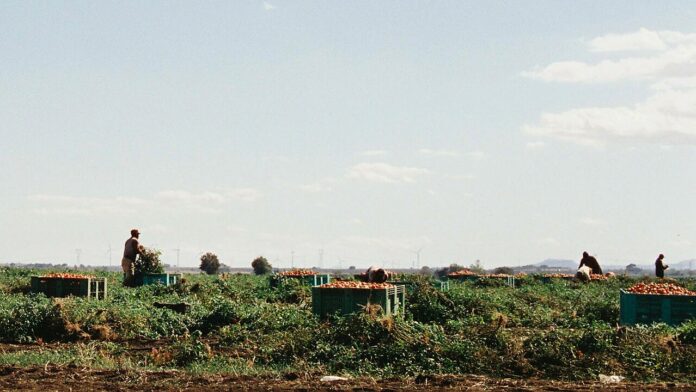
The system of illegal labour brokers in the fields and on building sites is called caporalato, and it is a crime in Italy.
There is a national line for trafficking and severe exploitation, run by the government’s Department for Equal Opportunities: 800 290 290. It is anonymous, free, and open 24 hours a day, every day of the year. It is not only for victims — anyone who knows of exploitation can call it. In an emergency, call 112.
Common mistakes
- Not asking for the busta paga. It is the first document in any claim.
- Not asking which CCNL and which livello apply. That is what fixes your pay.
- Treating “in nero” work as normal. If the work was done, the wages are still owed.
- Deleting WhatsApp messages. Conversations about hours and money are evidence.
Next step
If the problem is documents rather than pay, first check that whoever is advising you is on a register — and remember that much of this is free at a patronato.
Italy: check your adviser before you paySources
Every rule on this page comes from one of these. Italy has no statutory minimum wage, so the figure that applies to you lives in your sector’s CCNL — read it rather than trusting a date.
- CNEL — the national archive of collective agreements
- Ministry of Labour — the official list of patronati
- INL — richiesta di intervento ispettivo
- Numero Verde Antitratta — 800 290 290
- CGIL
- Ispettorato Nazionale del Lavoro
Last verified: 2026-09-08

