
Two things are said about Poland among us, and neither is entirely true. The first is that “study in Poland is free”. The second is that “Poland is the easiest visa in Europe”. The first is half true, and the second is several years out of date.
The real picture is more interesting than that, and there is a genuine opportunity in it for you too — provided you know which category applies to you. Let us talk plainly.
Who is the free study for — and are you on that list
Polish law lays down the rule that a full-time programme taught in Polish at a public university is exempt from fees for certain categories of people. Those categories are roughly these:
- Polish citizens
- Citizens of the European Union, the EEA and Switzerland
- Holders of the Karta Polaka, or those who can prove Polish origin
- Holders of permanent residence in Poland (zezwolenie na pobyt stały)
- Those holding EU long-term resident status
- Refugees and holders of subsidiary protection, and certain others residing on humanitarian grounds
- Those who have received a Polish government or NAWA scholarship that includes a fee waiver
Now the plain point. An ordinary Pakistani, Indian or Bangladeshi student applying straight from home does not fall into any of these categories. In normal circumstances you will pay fees. And note this too: a temporary residence permit granted only for the purpose of study does not move you into the free-tuition category — this is the misunderstanding on which many people build their plans.
These rules are detailed and there are exceptional cases within them, so if you have some connection to Poland — Polish descent, family living there, some existing residence status — ask the university’s admissions office about your situation in writing. The answer to that one question can save you hundreds of thousands of rupees.
So what is the attraction of Poland?
Price. Only price, and price by comparison.
At Poland’s public universities the fees for English-language programmes in ordinary subjects stay at roughly two thousand to four thousand euros a year. Some fields can be had for less than that, and some special programmes go higher. Medicine is a world of its own — there the fees run to roughly ten thousand to fifteen thousand euros a year.
Now compare: in Britain the same degree is fifteen to twenty-five thousand pounds a year, in America more than that, in Australia also somewhere higher. Poland is inside the European Union, the degree is recognised across Europe, it is in the Schengen area, and the fees are a quarter of theirs. That is the real story — not “free”, but cheap. And cheap is no small thing either.
One more thing to note: Polish-language programmes, even when you are paying their fees, are generally cheaper than the English-language ones. So the financial reward for learning the language exists here too — just not in the form of a complete waiver, as in the Czech Republic.
Scholarships — do not leave this box empty
Poland’s state agency NAWA runs several scholarships for foreign students, including programmes reserved for developing countries. In some the fee is waived and a monthly stipend is paid on top. The list of eligible countries changes every year, so do not assume whether your country is included or not — look for yourself.
The details are here: nawa.gov.pl and the official national portal study.gov.pl.
These applications are free and their deadlines are strict. Among us, people are ready to give an agent five hundred thousand rupees but are too lazy to fill in a free scholarship form. That laziness is expensive.
Which universities
These are all public institutions and they have English-language programmes:
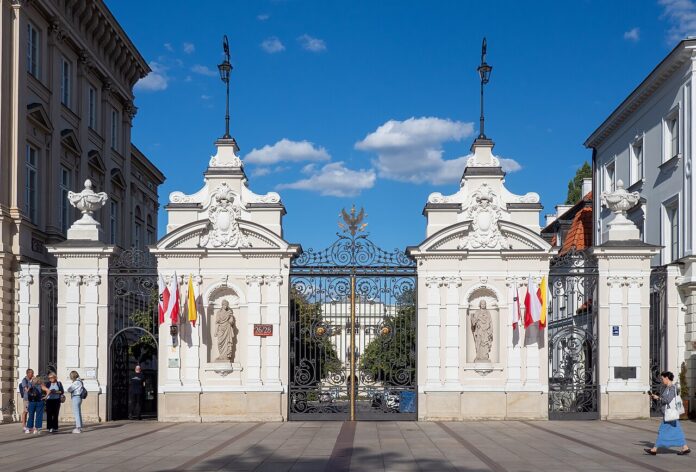
- University of Warsaw — the country’s largest university; social sciences, law, economics, computer science.
- Jagiellonian University, Kraków — founded in 1364, the country’s oldest; strong in medicine and the humanities.
- Warsaw University of Technology — the best-known engineering institution.
- AGH University, Kraków — mining, metallurgy, energy, automation.
- Poznań University of Technology — mechanical, electrical and IT.
- Nicolaus Copernicus University, Toruń — science and medicine, in a relatively cheap city.
- University of Wrocław — Wrocław is a big student city and the offices of international companies are here.
- Adam Mickiewicz University, Poznań — a wide range of subjects, strong linguistics and social sciences.
- Gdańsk University of Technology — on the coast, strong in engineering and the maritime sector.
- Lodz University of Technology — engineering and biotechnology; rent in Łódź is lower than in Warsaw.
Before choosing an institution, be sure to look up its name on study.gov.pl or in the official register of the Polish ministry of education. We will come back to this one step, because in Poland this is the place where most of the fraud happens.
The real language problem
You can do a whole degree in English. This is true and it is Poland’s greatest convenience.
But another truth is tied to it: Polish decides whether you will be able to stay there after the degree or not. Warsaw, Kraków and Wrocław have international service centres where you can get a job in English — accounting, IT support, customer service. But step outside them and the local economy runs in Polish. Hospitals, schools, the town hall, contractors, local companies — all in Polish.
And at the permanent residence stage Polish becomes a formal requirement. So the student who starts an evening Polish class from the first semester stands three years ahead of his classmate — even if both have the same degree. Most universities run cheap or free Polish courses for foreign students. Make use of them.
Proof of funds and the visa
For the Polish national visa (type D) you have to give the letter of admission, the receipt for the fees paid, proof of accommodation, health insurance, and proof of means of support for one year. The amount for support is calculated on a monthly basis and the money for the return journey is added to it; in practice people show the equivalent of roughly four to six thousand euros in their account. This is only a general estimate — check the correct amount and its formula in the current instructions of the Polish consulate in your city.
A practical point: appointment slots at Polish consulates are limited and fill up early in the busy season. Start the appointment process immediately after your admission, not a month before classes begin.
A realistic monthly budget
These are estimates for Warsaw and Kraków. In Toruń, Łódź, Lublin or Katowice the cost is clearly lower.
| Item | Monthly (PLN, approx.) | Note |
|---|---|---|
| University hostel (akademik) | 600 – 1,000 | The cheapest option, but places are limited |
| A room in a shared flat | 1,300 – 2,200 | Warsaw is the most expensive |
| Food | 800 – 1,300 | The lower end is possible if you cook at home |
| Health insurance | 80 – 200 | Voluntary NFZ membership or a private policy |
| Transport | 50 – 120 | Students get a half-fare discount |
| Phone and internet | 40 – 80 | — |
| Books and miscellaneous | 300 – 600 | — |
| Total (with hostel) | 1,900 – 3,300 | About 440 – 770 euros |
The annual tuition fee is separate, on top of this. When you work out the whole year, look at the two together, and leave room for annual increases in rent.
Working while studying
In Poland a full-time student is allowed to work without a separate work permit. This is a great convenience and many students cover their monthly costs with it.
But keep your expectations right. With the hourly wage of entry-level jobs you can run your accommodation and food; the plan of paying the tuition fee out of work usually fails, especially in the first year when you do not know the language and the study load is heavy too. The first year’s fees and accommodation should be arranged in advance.
After the degree — think about this part beforehand
Poland gives a graduate a temporary residence permit to look for a job or start a business, generally for nine months. If you find a job in that period you apply for the combined residence and work permit (jednolite zezwolenie na pobyt czasowy i pracę), and in the case of higher education and a better salary the EU Blue Card is another route. After that the years of legal residence keep adding up and the door to permanent residence opens further on.
This system exists, but it is not automatic. Nine months pass quickly. The student who has done an internship in the final year, whose CV fits the Polish market and who speaks a little Polish — for him those nine months are enough. For the one who starts thinking on the day of graduation, they usually are not.
Fraud — and the shape it takes in Poland
“Admission and visa both guaranteed”. No agent can guarantee a visa. The consul decides, and no middleman has any power over that decision. Whoever is selling a guarantee is selling certainty, not a service.
Fake admission letters and made-up bank statements. Consulates verify directly with the university and have their own ways of checking financial papers. If you are caught, the application is not merely refused — a record of forgery is created and a ban of several years can be imposed for the whole Schengen area. One false paper can close your next ten years, and there is no way to repair it.
Those private “colleges” that are really visa factories. Poland has had small private institutions whose real business was not education but selling admission letters. The fee is taken, the classes are nominal, the students do not attend at all, and in the end when the institution’s standing collapses all its students are in trouble. The only way to avoid this is for the institution’s name and your specific programme to be on the official list. Verify on study.gov.pl; if the name is not there, move on, however grand the office may be.
“Just get there first, we will see later”. Some people take a study visa merely as an excuse to enter Europe and drop their studies. Remember that your residence permit is tied to your enrolment; the university reports the removal and the permit falls away. After that comes life without papers — and Poland is not among the countries where there is any open route to getting papers later.
So how do you decide
Suppose you can arrange roughly seven to nine thousand euros for one year’s fees and living costs together, your marks are fine and you can study in English. In that case Poland is one of the most realistic doors into Europe for you. If even that amount is difficult, look first at the NAWA scholarships, and alongside them also look at the countries where study in the local language is free.
And what is the same in both cases: sending the application to the university yourself is free or costs a nominal fee. You can do this from your own email, in your own name, through the official portal. The amount the agent asks for is often equal to your entire first year’s fees — and he is selling you something you could have done yourself for free.
All the amounts, fees and conditions given above are general estimates which change every academic year, and nowhere in this piece is any promise of admission or a visa made. The rules on fee exemption and residence permits are especially detailed and apply differently to each person’s circumstances. Before transferring any money or submitting any form, verify your own situation with the university concerned, with study.gov.pl and with the Polish consulate in your country.

